
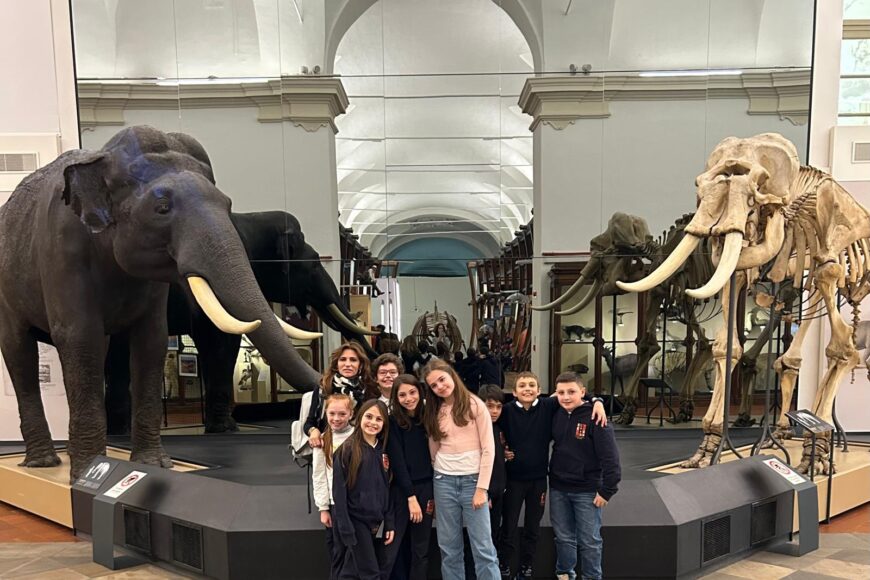
Darwin Day is a celebration honoring Charles Darwin on the anniversary of his birth on 12 February.
Charles Darwin was a biologist and naturalist famous for having formulated the theory of the evolution of plant and animal species through natural selection. A bit of a pioneer of everything that is the heart of science.
We live immersed in science, the functioning of our body and science, so is everything we eat with the food pyramid, carbohydrates, proteins, fats, so are atmospheric disturbances, increasingly catastrophic climatic events, the clouds in the sky which, if you know how to read like the ancient sailors did, will be able to tell you better than the weather, what the expected time will be.
Formula 1, acceleration, speed, simply the force of gravity that allows us to walk and not fluctuate as happens in space, the stars, domestic and non-domestic animals. I come from the world of research, where you quickly learn that everything that has been studied and analyzed before you can still be improved, to broaden and perfect sciences and a subject that usually arouses curiosity and attracts, I always try not to rely on the book, in middle school I begin to explain and then from there inevitably the hands raised, the questions, the curiosities start, discussions and debates open up. In all possible topics I ask them to delve deeper, to update themselves, to look at what is the latest news relating to a phenomenon, because, as I teach them, science changes from minute to minute. Scientists from every branch of science work incessantly to discover what has not yet been discovered and to maximize what already exists, touching on all points and all areas of our lives.
In high school I don’t even let them use the book, I tell them the topic of the day, each time someone takes turns coming to the blackboard and outlines it, they take notes and there too, inevitably with a storm of questions I ask them, before even explaining it, what in their opinion is the correct answer. Science elections must be like this, interactive, full of questions, and sometimes it can happen that they are surprised, because something wasn’t as they thought.
Science is full of amazing facts: octopuses have three hearts, honey never expires, our body shines but we don’t see it, lightning is hotter than the Sun, and plants communicate with each other. Other tidbits include the fact that human DNA contains remnants of ancient viruses, bacteria outnumber our cells, bone is stronger than steel, the brain has more synapses than stars in the Milky Way, and Saturn could float on water.
Triggering the spark of curiosity in them and always keeping them in progressive research is one of the best moments of my teaching of scientific subjects.
Micol Rigoni

