
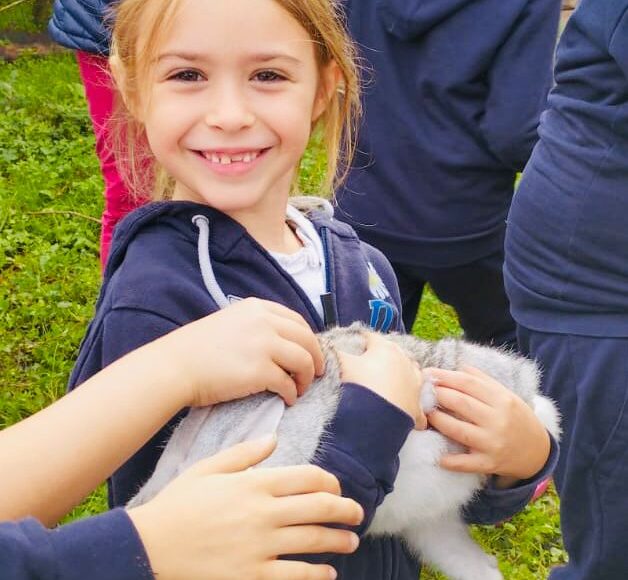
Spring is happiness: the days are starting to get longer, the sun is more intense, the windows are open, and the scent of nature awakens. It’s a thrill to observe the first sprouts of a bush in the garden! I love seeing the kids come down to the courtyard in short-sleeved shirts, as if it were June. Even the teachers are smiling more, abandoning their gray suits and shapeless, coffee-colored sweaters. They stroll through the corridors in floral shirts and colorful necklaces, almost as if they were about to go on a cruise!
Even the large potted ficus trees that adorn the corridors seem happier, their leaves shinier, a deep green, and their branches reaching toward the light. A hymn to happiness! Yes, happiness, that feeling that makes us feel good, that feeling at peace with the world, light-hearted, open, and benevolent toward others.
Marcus Aurelius, in his Meditations, wrote: “The happiness of your life depends on the quality of your thoughts.” I share this thought, I endorse it, and I’d like to paint it on the walls of our school. In fact, I’d like to write it on the path leading to our entrance staircase. This quote would be a way to remind parents and students that the beauty of life doesn’t depend on what happens around us, but on how we perceive it.
I like to remind kids that there’s a solution to every problem and that the words we speak should have only positive connotations. I love communicating the beauty of life, which comes only from a flow of positive thoughts. Who is foolish enough to wake up in the morning with a malicious thought about a colleague or a neighbor? Who is crazy enough to share a desk for an entire day with someone they don’t like? The good intentions for 2026 that all of us teachers wanted to share with our students can be summed up in this quote from Marcus Aurelius: “The happiness of your life depends on the quality of your thoughts.”
In this dissertation, let’s not forget Aristotle, who identified happiness as the ultimate goal of life, achieved through the practice of virtue. Joy, after all, is never an isolated event; rather, it is the result of conscious choices and daily acts of kindness. A smile exchanged, a helping hand extended to those in need, and the art of seeing beauty even in small things are all practices that nourish our soul and bring us closer to happiness.
This school year, we will continue to teach our children positive virtues, those virtues that will teach them to be happy. In the dance of life, every step toward positivity is a note that enriches the melody of our existence. And so, as spring blooms around us, let us continue to plant the seeds of joy; it will be our daily challenge!
Nicoletta Coppo

